
Single photo by Mojtaba Nikzad
Reviving the Land: Sustainable Agriculture in Bamiyan, Afghanistan
Bamiyan, located 240 kilometers west of Kabul, is a testament to Afghanistan's rich cultural heritage, with a history spanning over 5,000 years. Historically situated along the Silk Road, Bamiyan served as a melting pot of civilizations and a hub for cultural exchange. Agriculture has been the backbone of Bamiyan's economy for centuries, with the majority of its inhabitants engaged in farming. The region is renowned as Afghanistan's largest producer of potatoes, yielding up to 300,000 tons annually. This deep-rooted agricultural tradition reflects the enduring bond between the people of Bamiyan and their land, underscoring their commitment to sustainable farming practices passed down through generations.
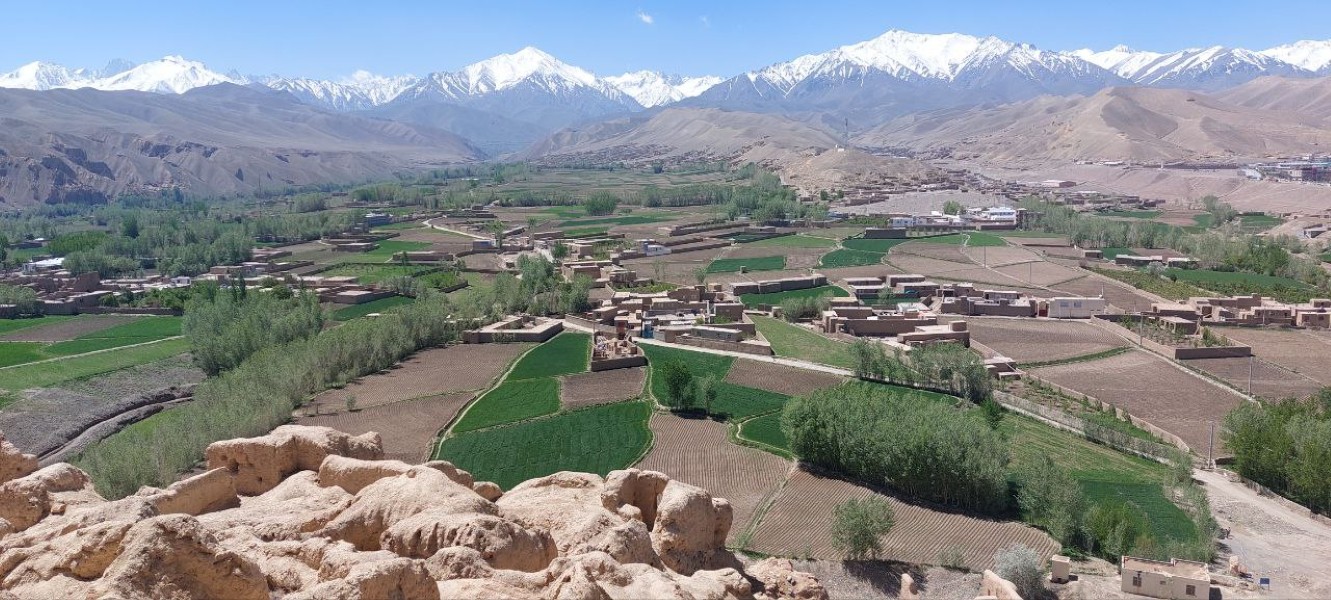
Bamiyan, in central Afghanistan, is a region of natural beauty and agricultural significance, yet it faces land degradation from soil erosion and deforestation, common in Afghanistan. This photo captures local farmers’ efforts to restore the land through sustainable practices. The image shows green fields, tree clusters, and mud-brick villages against snow-capped mountains, reflecting a harmonious landscape.
Farmers preserve trees to prevent erosion, promote crop diversity for soil health, and maintain plant cover to reduce water loss, visible in the lush fields. They use minimal fertilizers and pesticides, ensuring environmental and human health, and rely on rainwater, conserving scarce water resources. These practices have improved air quality and soil fertility, demonstrating holistic landscape management.
Scientifically, these methods enhance carbon sequestration, support biodiversity, and mitigate climate impacts, aligning with global efforts to upgrade degraded lands (Breakthroughs in Agricultural Research Multiply Harvests in Bamyan Province). This photo is a testament to Bamiyan’s green renaissance, offering a model for sustainable agriculture in degraded regions.
Table: Comparison of Sustainable Practices in Bamiyan
| Practice | Benefit | Impact on Land Degradation |
|---|---|---|
| Preserving Trees | Prevents erosion, enhances water retention | Reduces soil loss, improves ecosystem stability |
| Crop Diversity | Maintains soil fertility, reduces pest risks | Enhances soil health, prevents monoculture risks |
| Maximum Plant Cover | Reduces water loss, prevents erosion | Minimizes desertification, retains moisture |
| Minimal Chemicals | Protects soil and water quality | Reduces pollution, supports biodiversity |
| Rainwater Use | Conserves groundwater, sustainable water use | Mitigates water scarcity, supports agriculture |
This table summarizes how each practice contributes to the theme, reinforcing your entry’s strength. In additional, We are planning to expand the following projects this year:
Agroforestry Integration: Farmers strategically plant trees alongside crops to enhance biodiversity, stabilize soil, and provide natural shade, reducing the need for artificial irrigation. This practice helps combat desertification while increasing carbon sequestration.
Compost and Organic Soil Management: The use of compost and organic fertilizers instead of chemical inputs enriches soil fertility, enhances microbial life, and prevents contamination of local water sources, ensuring long-term agricultural productivity.
Water-Efficient Irrigation Systems: To adapt to water scarcity, farmers implement efficient irrigation methods such as drip irrigation and rainwater harvesting. These techniques maximize water use while reducing evaporation losses, helping sustain crops in arid conditions.
These practices align with global efforts to rehabilitate degraded lands and mitigate climate change impacts. Scientifically, they contribute to carbon sequestration, support biodiversity, and promote planetary health, making Bamiyan a model for sustainable agriculture in fragile ecosystems.