
3rd Single photo by Mojtaba Nikzad
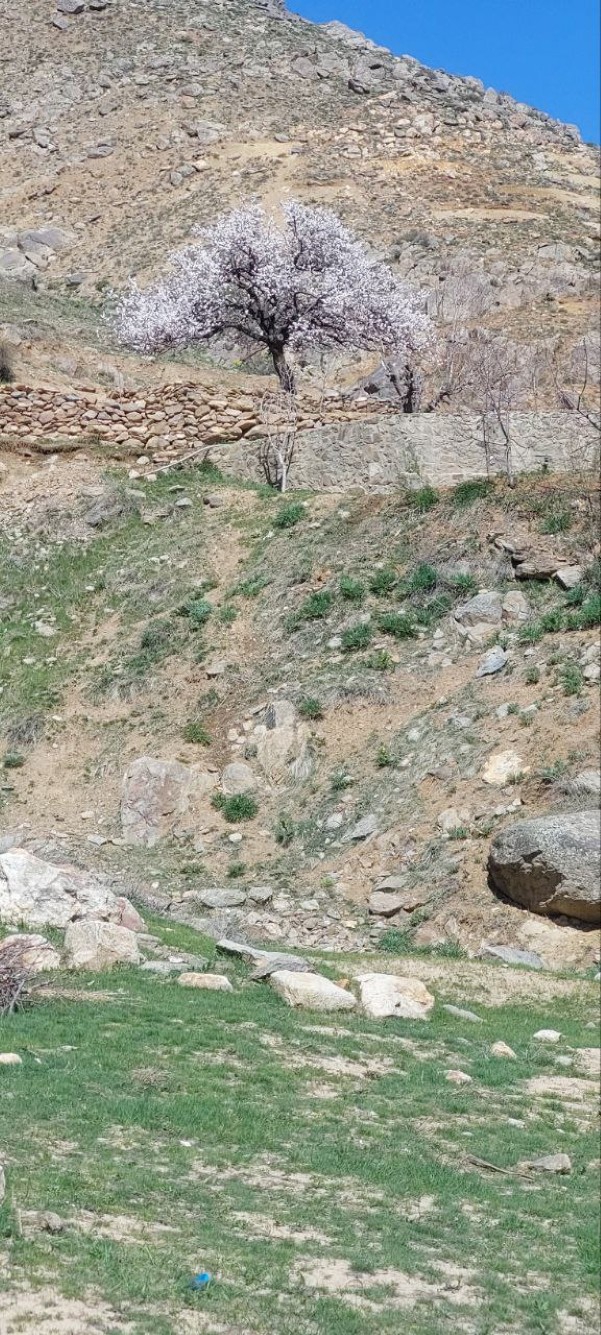
Stone and Blossom: Sustainable Land Management in Hesa Awal Behsud District, Afghanistan
The photo captures a scenic view from the Hesa Awal Behsud District of Maidan Wardak province in Afghanistan, showcasing a harmonious blend of nature and human intervention aimed at restoring degraded land. The image features an almond tree in full bloom, surrounded by young saplings, with stone barriers strategically placed to prevent soil erosion and flooding. This scene is a testament to the local farmers' and communities' efforts in implementing holistic landscape management practices.
Maidan Wardak province, located in central Afghanistan, has a history marked by conflict and environmental challenges. The region's mountainous terrain and rangelands have been prone to soil erosion, exacerbated by factors such as overgrazing, deforestation, and the impacts of prolonged conflict. In recent years, with relative stability, local farmers have taken proactive steps to restore the land's productivity and resilience.
Soil erosion is a significant environmental issue that can lead to loss of topsoil, reduced fertility, and increased risk of flooding. The planting of fruit trees, such as almond trees, helps in stabilizing the soil through their root systems, which bind the soil particles together, reducing the likelihood of erosion. Additionally, the canopies of these trees intercept rainfall, minimizing the impact of raindrops on the soil surface, thereby further reducing erosion. Stone barriers, or check dams, are another effective method used to control soil erosion. These structures slow down the flow of water, allowing it to infiltrate into the soil rather than running off and carrying away topsoil. By managing water flow, stone barriers also help in preventing flooding and retaining moisture, which is crucial for the growth of newly planted trees and saplings.
Environmental and Agricultural Activities:
Planting Fruit Trees: This activity not only helps in preventing soil erosion but also contributes to the restoration of biodiversity and can provide economic benefits through fruit production.
Building Stone Barriers: These structures are essential for water management, preventing both erosion and flooding, and ensuring that water is retained for the benefit of the planted vegetation.
Expanding Planted Areas: The presence of surrounding saplings indicates a concerted effort to expand the restored area, ensuring that the benefits are scaled up over time.
Selecting Suitable Species: The choice of almond trees, which are adapted to the local climate and soil conditions, ensures their successful growth and the sustainability of the restoration project.
Enhancing Landscape Beauty: The blooming almond tree and the green saplings not only contribute to the ecological health of the area but also enhance its aesthetic appeal, potentially attracting tourists and fostering a sense of pride among the local community.
The photo from Maidan Wardak province exemplifies the successful integration of traditional practices and modern understanding of land management to combat degradation. By planting fruit trees and constructing stone barriers, the local population is taking significant steps towards creating a sustainable and resilient landscape that benefits both the environment and the community.