
Single photo by Husnul Khotimah
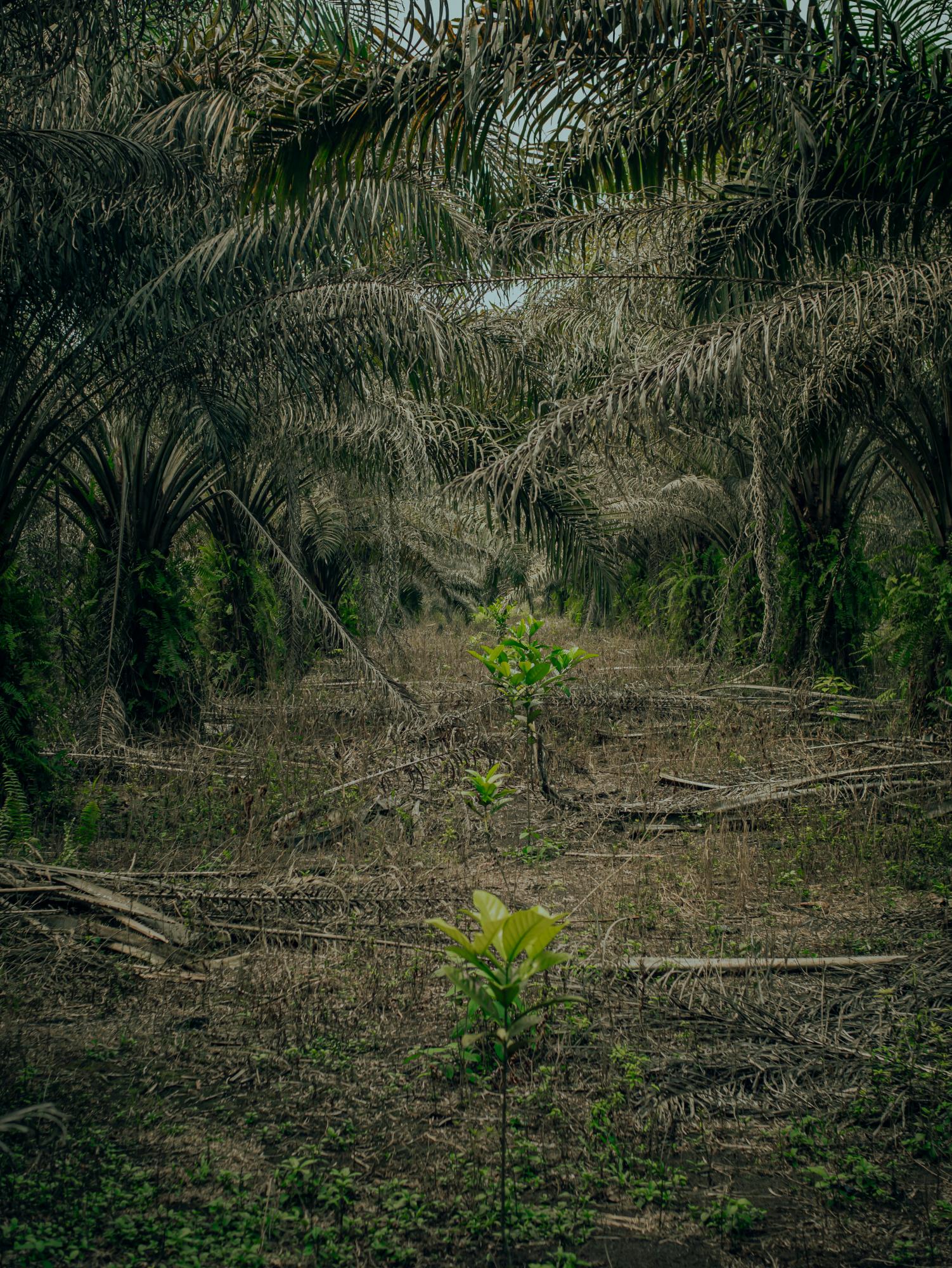
This image captures an early-stage implementation of the jangka benah (assisted transition) strategy in a peatland area of Riau Province, Indonesia. The young Liberica coffee (Coffea liberica) plants are intentionally intercropped beneath aging oil palm stands, marking a critical step toward transforming monoculture oil palm plantations into more ecologically diverse and resilient agroforestry systems.
The jangka benah approach serves as a transitional strategy that enables gradual diversification of land use without requiring abrupt removal of existing oil palms. In peatland contexts, this method is particularly valuable as it reduces the risk of peat subsidence and carbon emissions associated with intensive land clearing.
By integrating Liberica coffee—a species well adapted to lowland humid tropics—this strategy supports sustainable livelihoods for local communities while enhancing ecosystem functions such as soil stabilization, microclimate regulation, and biodiversity support.This practice represents a promising nature-based solution to address land degradation, improve land productivity, and contribute to long-term peatland restoration and climate resilience
goals.